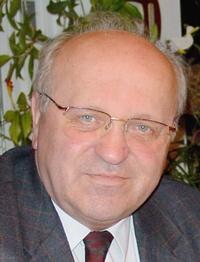
Hans Niedzballa
Born: Poland
Primarily active in: Germany
1945-2025
Hans A. Niedzballa
Hans Niedzballa was born in a then-German town that is now Wojnowice, Poland. His family in 1945 fled from the advance of the Soviet Red Army at the end of WorldWar II and settled in Bavaria, Germany. He attended Ludwig Maximilian University of Munich and in 1965 received a degree in Applied Physics in 1965 (as a combined Bachelor of Science /Master of Science degree).
Hans began working at the Munich Development Branch of Vereinigte Flugtechnische Werke (VFW, “United Aeronautical Works”) — the postwar consortium of Focke-Wulf, Weser Flugzeugbau and Hamburger Flugzeugbau. In 1966, he became the head of the avionics section at VFW and worked on the VFS VC 400 quad-tilt-propeller vertical and/or short takeoff and landing (V/STOL) transport. He also provided support for other German V/STOL aircraft including the EWR VJ 101 interceptor, the VFW VAK 191 nuclear strike aircraft and the follow-on A400 Advanced V/STOL Tactical FighterWeapons System (AVS). This work eventually led to the development of the Panavia Tornado multi-role fighter jet, which used variable geometry wings to shorten the takeoff distance instead of powered lift.
In 1969, Hans transferred to Munich to work at Elektronik-System-GmbH (ESG) — just two years after its founding in 1967 as a joint initiative by the GermanMinistry ofDefence and aerospace firms to advance electronic systems development.
A major inaugural project of ESG was development of the avionics system for the Panavia Tornado multi-role combat aircraft. Hans was a perfect fit for this opportunity to continue his work on the Tornado, so ESG made him engineering team leader for the avionics system.
During the late 1960s and 1970s, ESG expanded its role in defense electronics and system integration projects across air, land, and sea domains for both German and NATO forces. Hans worked in a range of leadership posts during his time at ESG. He became section head for systems analysis in 1970; worked as the section head for computer systems and science from 1974-1980, and departed the company as a research and development project manager.
From 1984-1990, he was the leader of the air defense program for Contraves Deutschland GmbH —the German segment of the parent defense company based in Switzerland. Contraves was acquired by the German firm Rheinmetall in 1999. Hans after 1990 spentmuch of his subsequent career as a technology consultant focused on system/software-engineering, aviation, transport systems and energy. His work as a consultant included developing V/STOL-related patents for Airbus Defence and Space.
From 1996–2002, he also worked as a guest scientist at the Technical University ofMunich(TUM)Institute of Aeronautics. He became a member of VFS in 2000 and was active for more than a decade, publishing several papers on vertical flight at the biennial International Powered Lift Conference (IPLC), of which VFS is a co-sponsor.
Even amid his advancing age, Hans remained very active in the Munich-area aerospace community and closely collaborated with TUM. His contributions will be remembered and honored.
Hans A. Niedzballa passed away on Sept. 25, 2025, at the age of 87, after a long illness.
Source: In Memoriam from Vertiflite, January/February 2026